A refiner and the compliance guardrail both touch compliance, which is why they get mixed up, but they do opposite jobs and run at different times. A refiner rewrites your content to fix it; the guardrail judges it pass or fail and blocks a publish that still breaches a rule. The order is the key: the refiner runs first, so content gets a chance to be fixed before the guardrail ever sees it.

The pipeline: refiners run before the guardrail

When content is generated, or when you run the refiners on a draft, the refiner rewrites it to match your brand and compliance rules. Only later, at publish, does the guardrail judge what’s left. So the refiner is the fixer that goes first, and the guardrail is the backstop that catches anything it missed. A well-tuned refiner means most pieces clear the guardrail on the first try, and when one doesn’t, the guardrail’s suggested fix feeds a one-click refiner edit before you re-check.
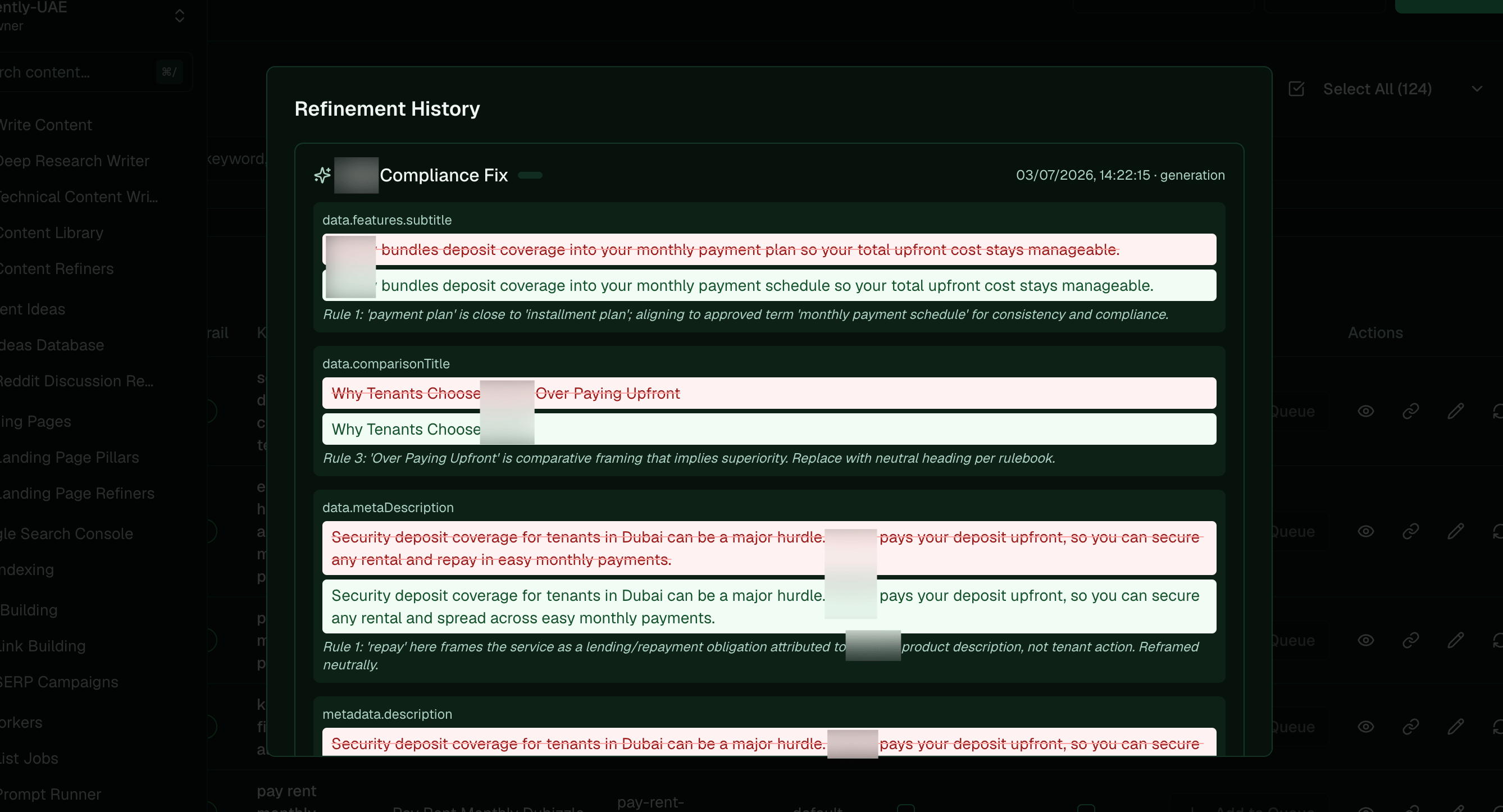
A Refinement History panel showing a Compliance Fix run: field-by-field before/after edits, each annotated with the rule it aligns the copy to.

Fix vs gate, side by side

Refiner (fix)Guardrail (gate)
JobRewrite content to be on-brand or compliantDecide pass/fail and block a non-compliant publish
OutputEdited content: a refined draft, or patched landing-page fieldsA verdict plus the violations, no edits
You configureThe edit — a rule that rewrites textThe rules — org context plus a rule set, and a per-type toggle
When it runsFirst: at generation, or on demandAfter: at publish

When your policy or marketing language changes, start with the guardrail

Update the two in the right order. When your compliance requirements or approved marketing language change, write or update the guardrail rules first, because they’re your test for what “compliant” now means. Check them against known samples, copy you know should pass and copy you know should fail, until the guardrail gets both right (see Calibrate the guardrail). Once the test is solid, update the refiners to edit content into shape automatically, so new drafts pass on their own. The guardrail defines the target; the refiner automates hitting it. Reach for a refiner when you want to change the content; reach for the guardrail when you want to stop bad content from shipping. Related: Set up the compliance guardrail · Calibrate the guardrail · How the guardrail decides pass/fail · Automate compliance checks · Set up blog refiners · LP refiners