Be specific about the outcome
Weak: “improve the article.” Strong: “rewrite the intro to lead with the customer’s pain, and add an FAQ from the People-Also-Ask questions.” Pi does better with a concrete target than a vibe.Ask it to check before it acts
This is the habit that pays off most. Tell Pi to confirm its plan before it makes changes. A prompt worth ending with:Watch the task tree, expect it to pause
Pi shows a live tree of what it’s doing (research, sub-agents, tool calls). You don’t need to babysit it, just glance at it. For risky or ambiguous steps, Pi stops and puts an item in the Agent Inbox. Sometimes that’s an approval (“OK to publish or delete this?”) for you to accept or reject, and sometimes it’s a question (“which of these three angles do you want?”) for you to answer.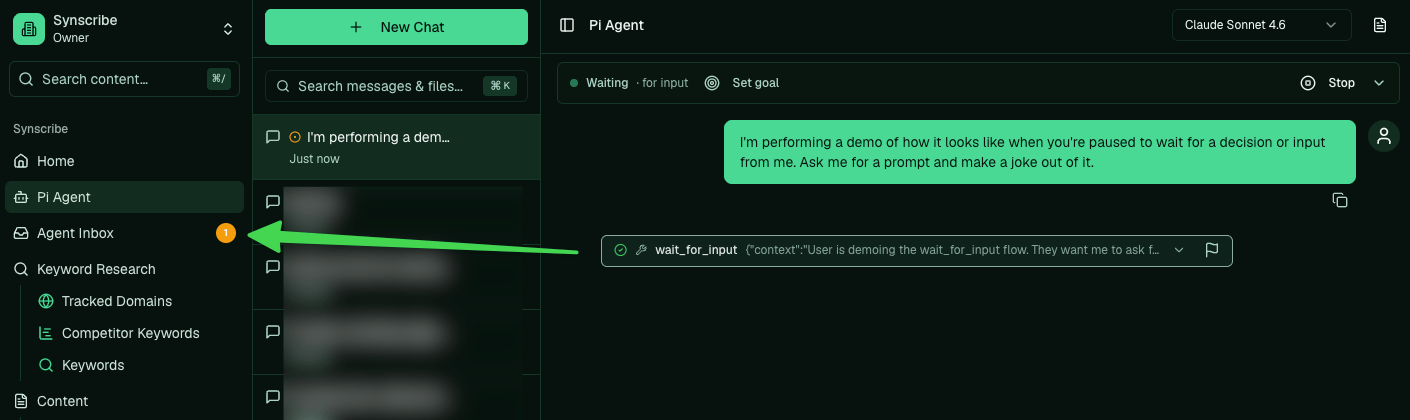
Pi paused, waiting on you. The Agent Inbox picks up an unread badge when it needs a decision.
A Pi task that seems stuck is almost always waiting for you in the Agent Inbox. Watch the unread badge.
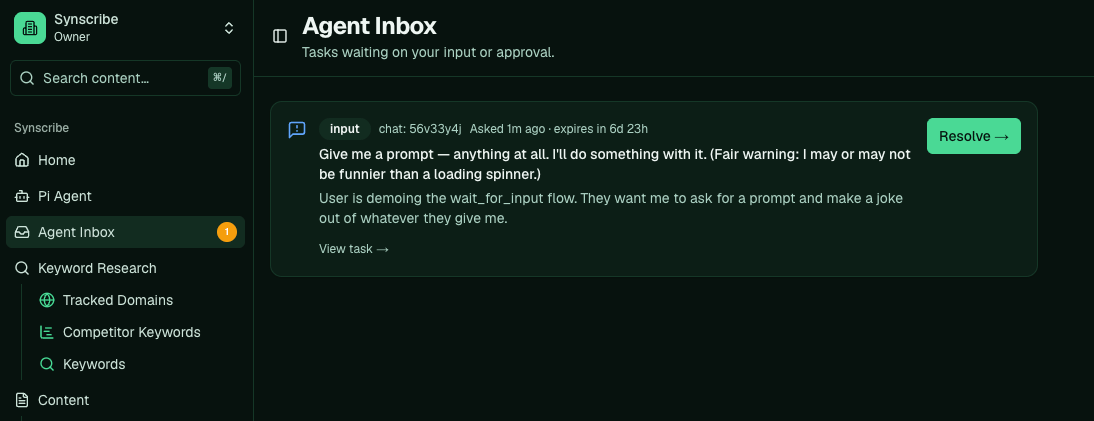
The Agent Inbox: everything Pi is blocked on, each with a Resolve button.
Ground it in your own context
You’ll get better output by pointing Pi at your own material first: your Product Bible, your company info, and your latest notes, rather than starting from keywords. Start from who you sell to, not the keywords. See How to research your company and build the Product Bible.Flag bad answers
If Pi does something wrong, the easiest fix is to ask it to file a report right in the chat. It sends the team the full context of what happened, so it gets fixed at the source. You can also use the feedback flag on a specific message. Either way, see Not working? File a report.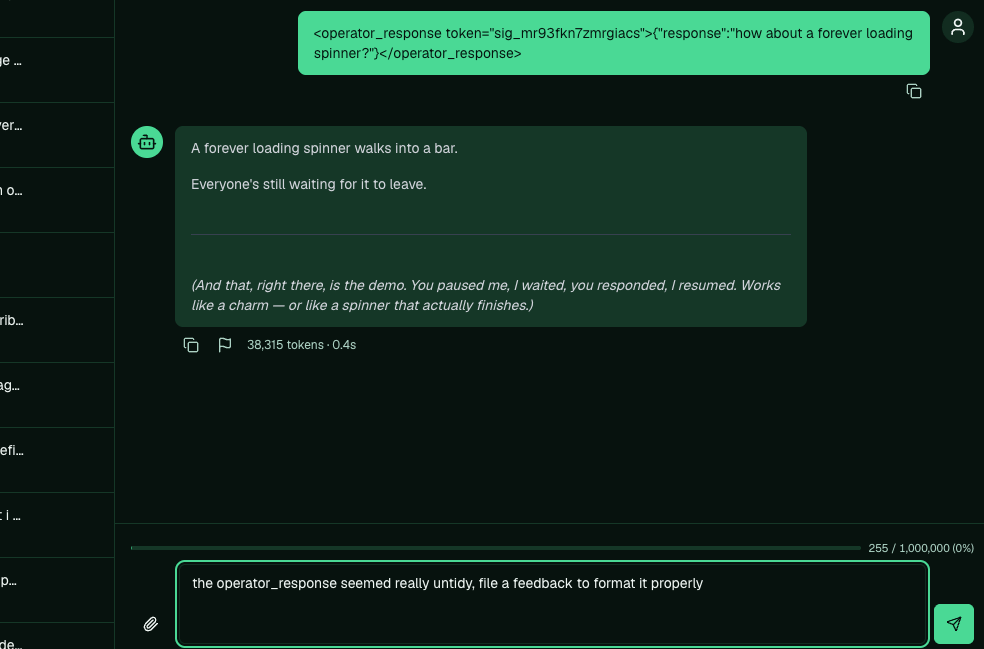
Ask Pi to file a report in plain language, and it sends the team the full context.